
The Eagle Ford Shale in 2026: Drilling Activity, Production, and What It Means for Mineral Owners
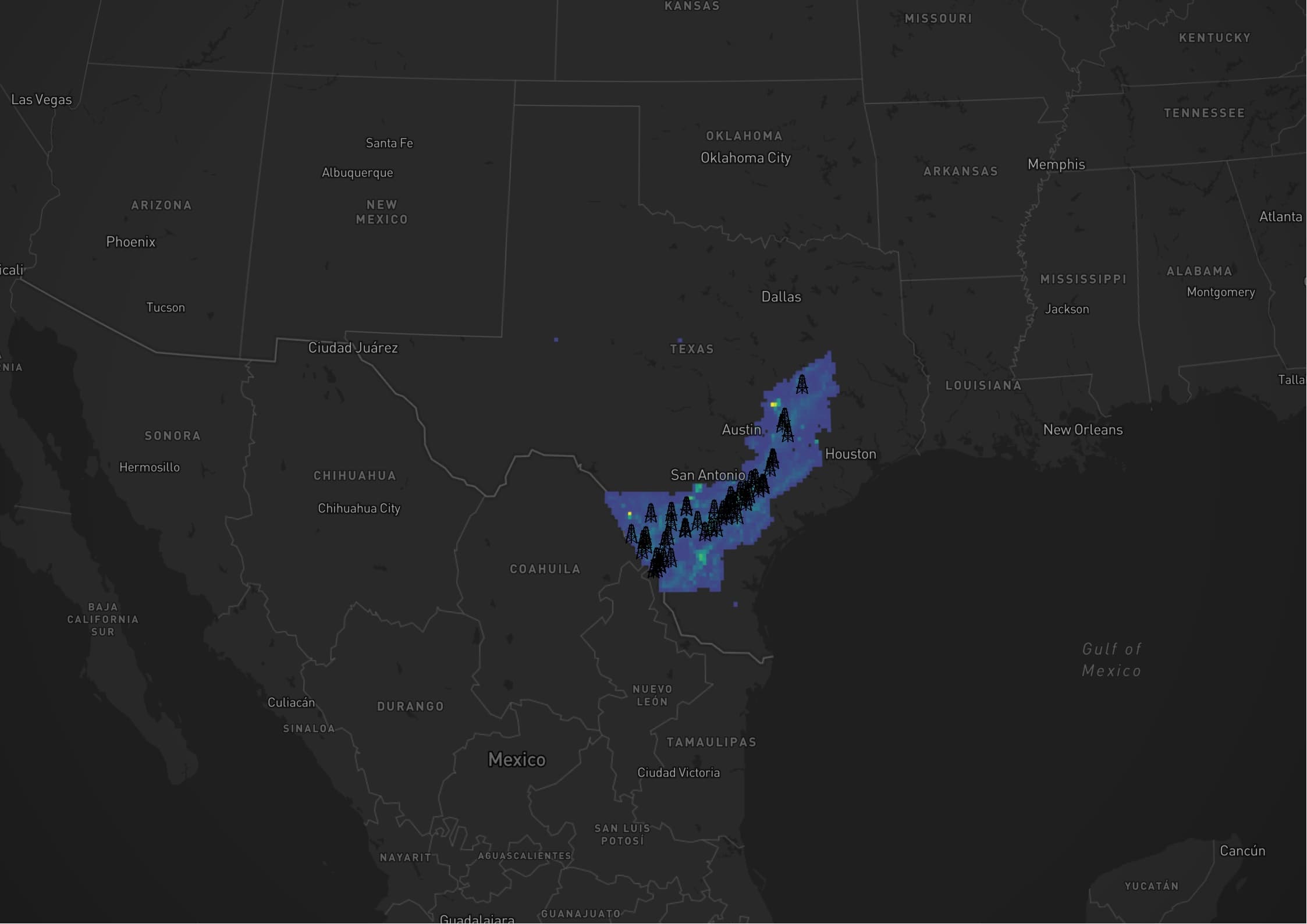
Updated July 2026. All figures below come from Texas Railroad Commission well records and monthly production data covering the 30-county Eagle Ford Shale footprint, current through mid-July 2026.
If you own minerals or royalties anywhere in South Texas, it's good to know where most of the drilling activity is in the Eagle Ford and how that affects the value of your minerals.
The Eagle Ford Shale is a mature, steady, oil & gas play. Operators pulled more than 411 million barrels of oil and over 3.1 trillion cubic feet of natural gas out of the play in the last 12 months. Operators filed 691 new drilling permits in the first half of 2026 alone. That is real, ongoing activity, and it directly affects the value of Eagle Ford Shale mineral rights and royalties.
Eagle Ford Shale Drilling in 2026
The map above shows the full Eagle Ford footprint, running from the border counties southwest of San Antonio up through the Austin Chalk counties east of Austin. The rig icons mark where drilling rigs are working right now.
Here is the state of Eagle Ford Shale Texas drilling through July 10, 2026, across the 30 counties that make up the play:
| 2026 Year-to-Date Activity | Count |
|---|---|
| New drilling permits filed | 691 |
| Wells spudded | 272 |
| Wells completed | 521 |
| New wells turned to production | 177 |
| Permits on file, not yet drilled | 1,053 |
| Drilled but uncompleted wells (DUCs) | 415 |
Keep in mind spud counts might be a little off due to reporting lag from operators.
For context, operators filed 1,520 permits across the full year of 2025, so 2026 is tracking at a nearly identical pace, with 691 permits by mid-July. June 2026 was actually the strongest permitting month of the year with 158 new permits filed. Activity is holding steady, not fading.
And this is not legacy vertical drilling. Of the 691 permits filed this year, 636 are for horizontal wells. That is 92 percent. These are modern, long-lateral wells that cost millions of dollars each. Operators do not spend that kind of money in a play they are giving up on.
Where the Eagle Ford Shale Drilling Rigs Are Right Now
Permits tell you where operators plan to drill. Rig activity tells you where they are drilling today. Over the last 90 days, rigs moved onto pads for 246 wells across the play.
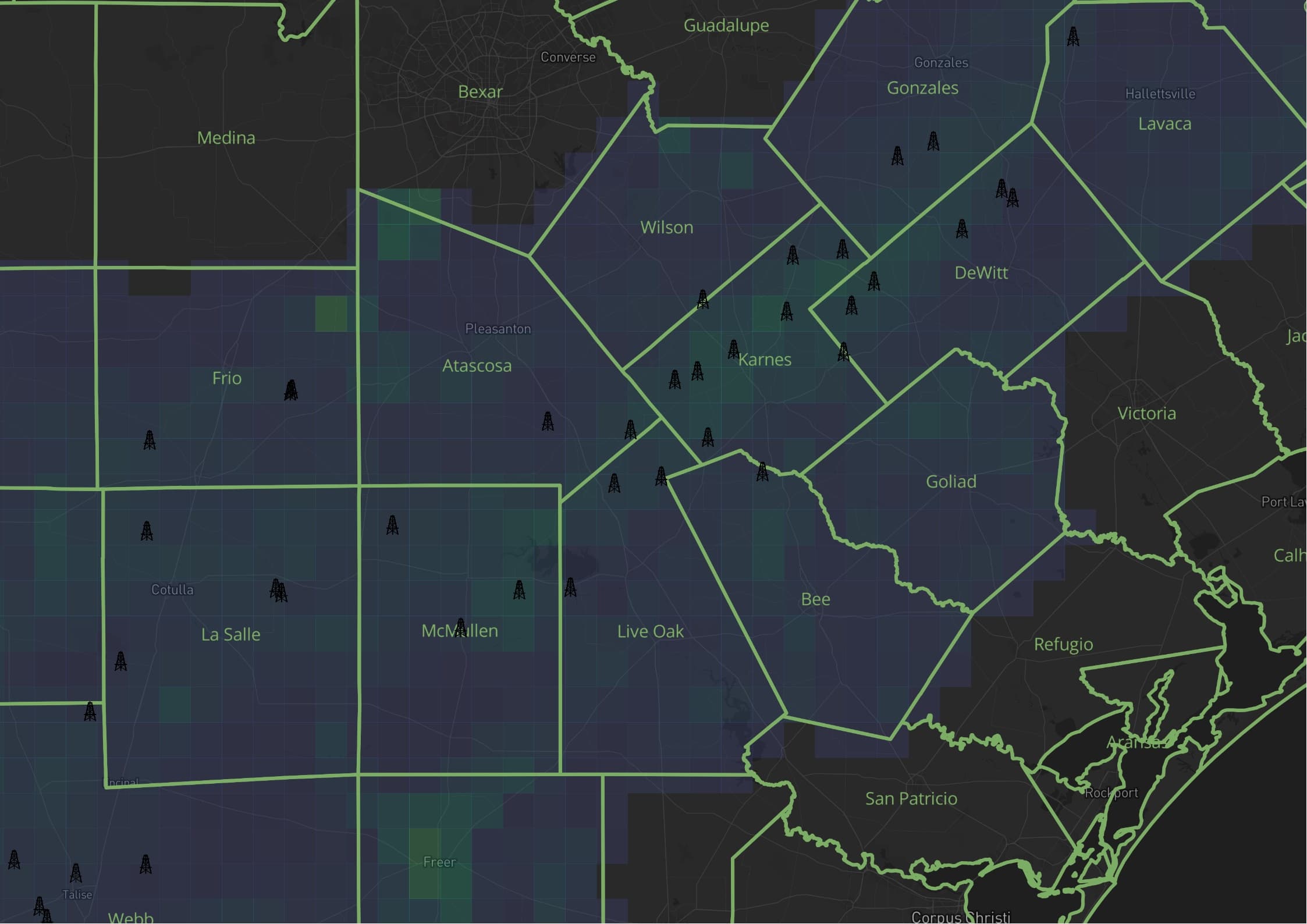
Here is where those Eagle Ford Shale drilling rigs have been working:
| County | Wells With Rig on Pad (Last 90 Days) |
|---|---|
| Karnes County | 48 |
| DeWitt County | 34 |
| Dimmit County | 33 |
| La Salle County | 32 |
| Live Oak County | 15 |
| McMullen County | 13 |
| Maverick County | 12 |
| Atascosa County | 12 |
| Gonzales County | 9 |
| Frio County | 8 |
Karnes County remains the heart of the play. In just the last 30 days, rigs moved onto pads for 33 wells in Karnes alone, more than double any other county. If you own minerals in Karnes, DeWitt, Dimmit, or La Salle, you are sitting in the most active drilling corridor in South Texas.
The Hottest Counties for New Permits in 2026
New permits are the best forward-looking signal for mineral owners, because a permit filed today usually means a well drilled within the next 12 to 24 months. Here is where operators filed permits this year:
| County | 2026 Permits (Through July 10) |
|---|---|
| DeWitt County | 106 |
| Webb County | 88 |
| Dimmit County | 76 |
| La Salle County | 71 |
| Karnes County | 56 |
| Gonzales County | 40 |
| McMullen County | 37 |
| Frio County | 34 |
| Live Oak County | 31 |
| Atascosa County | 26 |
| Lavaca County | 25 |
Worth noting for owners in the eastern part of the play: Lavaca, Fayette, Washington, Burleson, and Lee counties continue to see steady permitting as operators extend development into the Austin Chalk and eastern Eagle Ford.
Eagle Ford Production: 411 Million Barrels in 12 Months
Over the trailing 12 months of reported production (May 2025 through April 2026), wells across the Eagle Ford's 30 counties produced:
- 411.5 million barrels of oil, roughly 1.13 million barrels per day
- 3.15 trillion cubic feet of natural gas, roughly 8.6 billion cubic feet per day
That production came from 41,793 individual producing wells, and there are 47,199 active wells across the play in total. Every one of those wells writes royalty checks to mineral owners every month.
Top Oil Producing Counties (Trailing 12 Months)
| County | Oil Production (Barrels) |
|---|---|
| Karnes County | 89.5 million |
| DeWitt County | 51.2 million |
| La Salle County | 49.0 million |
| Dimmit County | 35.7 million |
| McMullen County | 27.6 million |
| Atascosa County | 27.0 million |
| Gonzales County | 26.4 million |
| Live Oak County | 21.7 million |
| Webb County | 20.9 million |
Top Gas Producing Counties (Trailing 12 Months)
| County | Gas Production (Mcf) |
|---|---|
| Webb County | 1.23 trillion cubic feet |
| La Salle County | 381.8 billion cubic feet |
| Karnes County | 291.8 billion cubic feet |
| DeWitt County | 288.9 billion cubic feet |
| Dimmit County | 228.9 billion cubic feet |
| McMullen County | 214.7 billion cubic feet |
| Live Oak County | 146.8 billion cubic feet |
| Washington County | 100.0 billion cubic feet |
Webb County is a monster on the gas side, producing well over a trillion cubic feet in 12 months, nearly 40 percent of the entire play's gas output.
Who Is Drilling the Eagle Ford in 2026
The operators leading the play this year are some of the largest energy companies in the United States:
- ConocoPhillips filed 115 permits this year and produced 96.6 million barrels over the trailing 12 months, the most of any operator in the play
- EOG Resources filed 100 permits and produced 58.6 million barrels
- Devon Energy filed 37 permits (20.1 million barrels produced)
- BP America produced 27.5 million barrels and continues permitting in Karnes and the surrounding area
- Magnolia Oil & Gas remains the dominant operator in the eastern counties, including Washington and Burleson
This matters if you own minerals. When your acreage sits under a ConocoPhillips or EOG unit, your royalty stream is backed by an investment-grade operator with decades of drilling inventory, and buyers pay take that kind of certainity into account.
What This Means for Eagle Ford Shale Mineral Rights Values
The Eagle Ford is a mature play. Most of the best rock in the core counties has at least one well on it already. But three things are keeping Eagle Ford Shale mineral rights valuable in 2026:
1. Infill and redevelopment drilling. Those 691 permits this year are largely infill wells, meaning operators are drilling additional wells on units that already produce. If you receive royalty checks today, there is a real chance your unit gets another well or two over the next decade.
2. Refrac and Austin Chalk upside. Operators are returning to older wells and stacking new targets like the Austin Chalk on top of existing Eagle Ford units, especially in the eastern counties. Acreage that looked fully developed five years ago is getting a second life.
At the same time, individual wells decline. A well that paid you 2,000 dollars a month in its first year might pay 300 dollars a month in year six. That decline is normal and it is exactly why the value of a royalty interest is highest when production is strong and drilling activity around you is visible, like it is right now in the counties listed above.
Thinking About Selling Eagle Ford Shale Royalties?
Plenty of owners hold their minerals for generations, and if your checks are steady and you do not need the capital, holding is often the right call.
But if you have thought about whether to sell Eagle Ford Shale oil & gas royalties, 2026 is a legitimately good window to at least find out what your interest is worth:
- Production across the play is strong
- Permit and rig activity in counties like Karnes, DeWitt, Dimmit, La Salle, and Gonzales means buyers are paying for future drilling, not just current production
Common reasons owners sell: simplifying an estate, converting a small inherited fractional interest into usable cash, funding a purchase or paying off debt, or just preferring a lump sum today over uncertain checks spread across 20 years.