
Permian Basin Mineral Rights in 2026: The Numbers Every Mineral Owner Should Know
Updated July 2026. Written by Longhorn Minerals. Based on well data covering 455,495 Permian Basin wells in Texas and New Mexico.
The Permian Basin is the busiest oil field in America. Over the past 12 months, it produced about 2.3 billion barrels of oil. That works out to roughly 6.3 million barrels every single day. It also produced about 10.6 trillion cubic feet of natural gas.
So far in 2026, oil companies have filed 3,730 new drilling permits in the basin and started drilling 2,600 new wells.
If you own Permian Basin mineral rights, these numbers matter to you. Where the drilling happens is where the money flows. This report breaks it all down, county by county.
The Permian Basin in 2026, at a Glance
| What We Measured | The Number |
|---|---|
| Oil produced, last 12 months | About 2.29 billion barrels |
| Gas produced, last 12 months | About 10.6 trillion cubic feet |
| Wells currently producing | About 125,000 |
| New permits filed in 2026 so far | 3,730 (2,130 in Texas, 1,600 in New Mexico) |
| New wells started in 2026 so far | 2,600 |
| Wells finished in 2026 so far | 1,919 |
| Wells drilled but not yet finished | About 3,800 |
| Permits waiting to be drilled | About 6,700 |
| New permits that are horizontal wells | 91% |
| Average length of new wells (sideways part) | About 11,600 feet, over 2 miles |
Two numbers here are worth a closer look if you own minerals.
First, there are about 6,700 permits waiting to be drilled and 3,800 wells drilled but not yet finished. Every one of those is a future well. Future wells mean future royalty checks for the mineral owners under them.
Second, new wells on average now stretch more than two miles sideways. A well that long can pool more mineral owners into receiving royalties.
Where the Drilling Is Happening in 2026
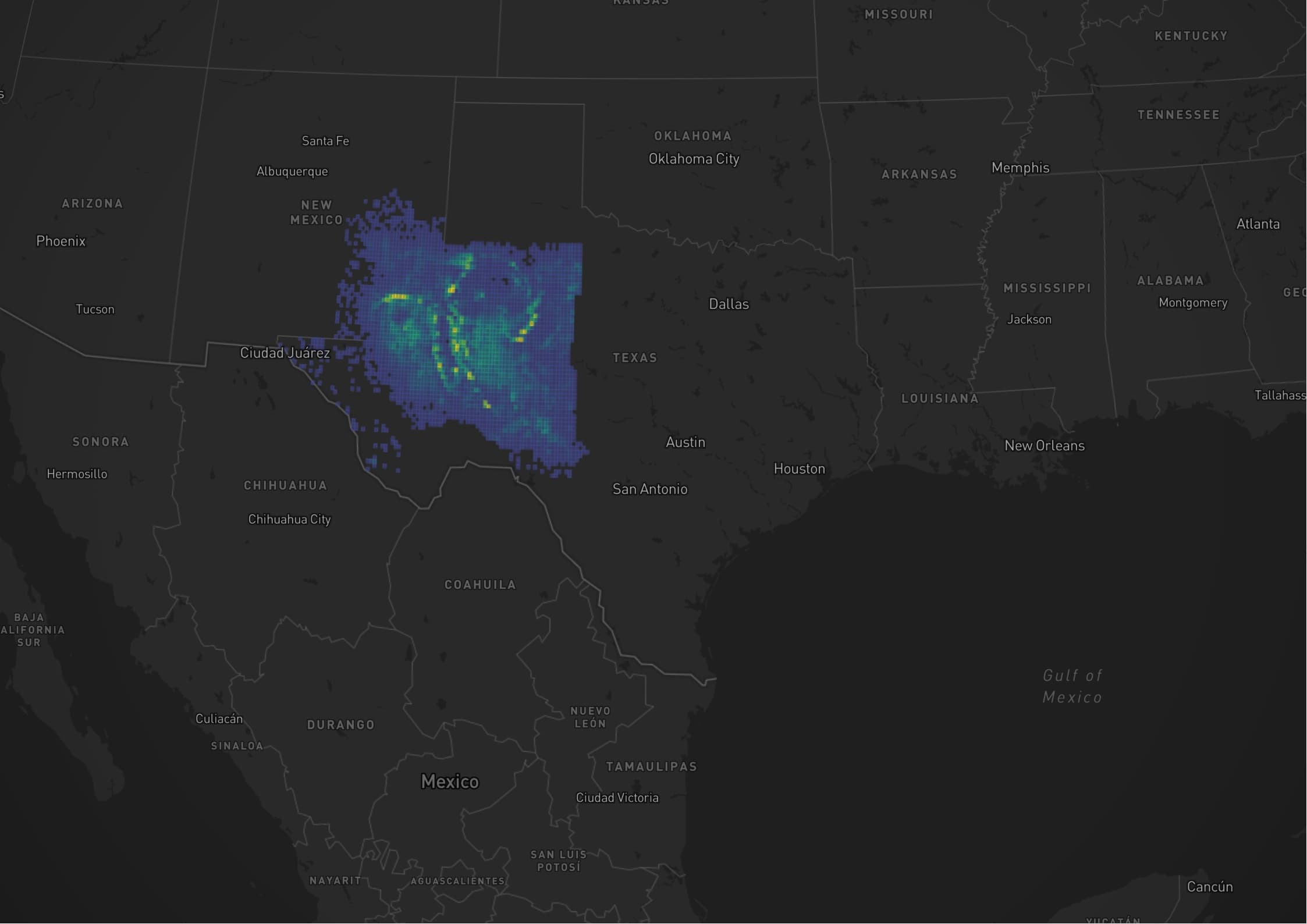
The map above shows all 455,495 wells in our data. The bright spots are where drilling is hottest: the Delaware Basin along the Texas–New Mexico line on the west side, and the Midland Basin around Midland on the east side.
Permits are a good indicator of where drilling is heading and where oil companies plan to spend their money. Here are the counties with the most new permits this year:
| Rank | County | State | 2026 Permits | 2026 Wells Started |
|---|---|---|---|---|
| 1 | Eddy | NM | 868 | 372 |
| 2 | Lea | NM | 725 | 329 |
| 3 | Midland | TX | 277 | 235 |
| 4 | Loving | TX | 206 | 162 |
| 5 | Upton | TX | 197 | 262 |
| 6 | Reeves | TX | 170 | 160 |
| 7 | Glasscock | TX | 163 | 133 |
| 8 | Martin | TX | 154 | 180 |
| 9 | Reagan | TX | 103 | 119 |
| 10 | Andrews | TX | 100 | 75 |
The big story is on the New Mexico side. Eddy and Lea County together got almost 43% of all Permian permits this year. That is more than the next eight counties combined.
If you own Texas mineral rights, the counties carrying the load are Midland, Loving, Upton, Reeves, Glasscock, and Martin.
Rig data tell the same story. We looked at every well where a drilling rig moved onto location in the past 45 days. Eddy County had 107 of them and Lea County had 89. Midland County was next with 32, then Loving with 19 and Glasscock with 17.
The Top Oil Producing Counties
Permits show the future. Production shows what is paying royalty checks right now. Here are the counties that produced the most oil over the past 12 months:
| Rank | County | State | Oil Produced (12 months) |
|---|---|---|---|
| 1 | Lea | NM | About 417 million barrels |
| 2 | Eddy | NM | About 371 million barrels |
| 3 | Martin | TX | About 240 million barrels |
| 4 | Midland | TX | About 227 million barrels |
| 5 | Reeves | TX | About 169 million barrels |
| 6 | Loving | TX | About 168 million barrels |
| 7 | Upton | TX | About 105 million barrels |
| 8 | Howard | TX | About 82 million barrels |
| 9 | Reagan | TX | About 72 million barrels |
| 10 | Andrews | TX | About 64 million barrels |
The Top Gas Producing Counties
| Rank | County | State | Gas Produced (12 months) |
|---|---|---|---|
| 1 | Eddy | NM | About 1.9 trillion cubic feet |
| 2 | Lea | NM | About 1.6 trillion cubic feet |
| 3 | Reeves | TX | About 1.3 trillion cubic feet |
| 4 | Midland | TX | About 0.9 trillion cubic feet |
| 5 | Loving | TX | About 0.75 trillion cubic feet |
| 6 | Martin | TX | About 0.73 trillion cubic feet |
| 7 | Culberson | TX | About 0.61 trillion cubic feet |
| 8 | Reagan | TX | About 0.52 trillion cubic feet |
One thing jumps out here. Reeves and Culberson counties rank much higher for gas than they do for oil. If you own minerals there, a big part of your value may come from gas, not just oil.
The Companies Doing the Drilling
The company operating the wells on your land matters. Operators with a strong track record and deep pockets tend to inspire confidence in future well performance. Here are the ten companies that filed the most permits in the Permian this year:
- Permian Resources with 398 permits
- ExxonMobil with 382 permits
- Occidental (Oxy) with 313 permits
- Diamondback Energy with 251 permits
- EOG Resources with 225 permits
- Devon Energy with 183 permits
- Mewbourne Oil with 128 permits
- Matador Resources with 125 permits
- ConocoPhillips with 125 permits
- Coterra Energy with 108 permits
ExxonMobil is also the busiest driller right now. Over the past 45 days, Exxon moved rigs onto 52 well locations. Devon was next with 36, then Oxy with 32 and Mewbourne with 27.
If your royalty checks come from one of these companies, or you got a lease offer naming one of them, your minerals sit in an active area. That is a good sign for value.
What This Means for You as a Mineral Owner
If your minerals are already producing. Your royalty checks are only part of the story. In the busy counties above, buyers also look at the wells that have not been drilled yet under your land. Sometimes the future wells are worth more than the current ones.
If your minerals are leased but nothing has been drilled. Remember those 6,700 waiting permits and 3,800 unfinished wells. A lot of leased land in the Permian will see new wells in the next few years. The first thing to check is whether any permits have been filed on or near your land. That one fact can change your value a lot.
If your minerals are in a quiet area. The Permian is huge, and the drilling is packed into a small number of counties. If your county is not on these lists, your minerals may still have value, but it is mostly a bet on the future.
How Much Are Permian Basin Mineral Rights Worth?
There is no single answer, and you should be careful with anyone who gives you one without looking at your property first.
Two tracts in the same county can be worth very different amounts. Value depends on exactly where your land sits, which company operates there, what wells already exist, how many wells could still be drilled, and your royalty rate. You can convert your acreage and royalty rate into a standard measure with our free net royalty acres calculator, which is what buyers use to compare tracts.
The numbers in this report can tell you one thing for sure. If your minerals are in a county near the top of these lists, buyers are paying attention to your area. If your county is not on the lists, expect lower offers, and be careful about anyone promising big money.
The only real way to know what your minerals are worth is to look up wells, permits, production numbers on and near your specific tract. That is the work we do every day, and we do it for free.
Common Questions
How do I find out if there are permits on my land? In Texas, permits are public records at the Railroad Commission. In New Mexico, they are at the Oil Conservation Division. Or just send us your legal description and we will look it up for you at no cost.
Should I sell my mineral rights in the Permian Basin or keep them? That depends on you. Keeping them means you might benefit from future drilling. Selling means you get a lump sum of money now instead of monthly checks over many years. Some owners sell part and keep part. Either way, know what your minerals are worth before you decide to sell mineral rights in the Permian Basin or anywhere else.
Are mineral rights worth more in some counties than others? Yes, by a lot. The drilling and production numbers in this report show why. Money follows the rigs.