
The DJ Basin: A Data-Driven Overview
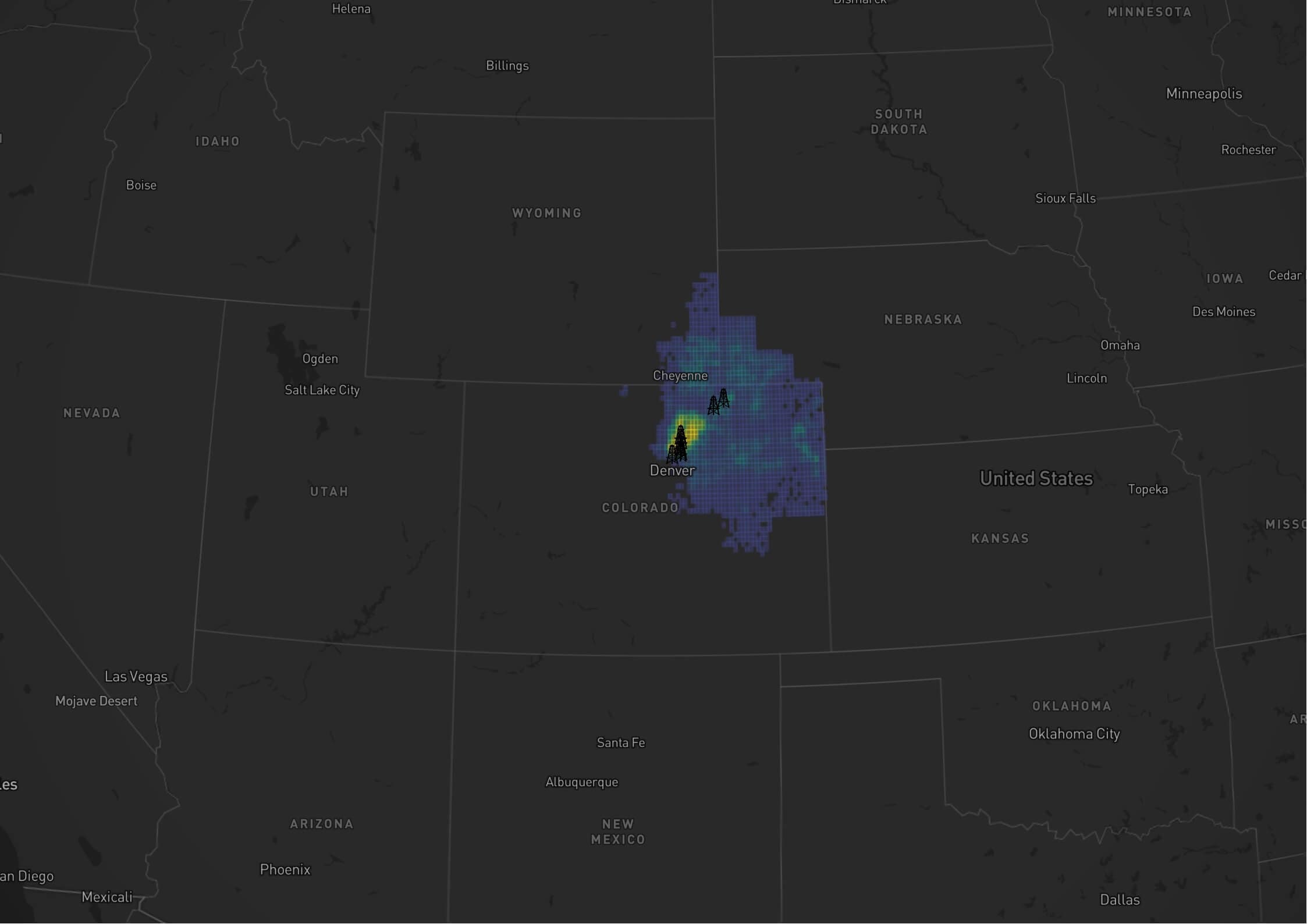
Updated July 2026. Every statistic in this article was computed from a dataset of 100,256 well records covering the Colorado, Wyoming, and Nebraska extent of the Denver-Julesburg Basin, current through mid-July 2026.
The DJ Basin, short for Denver-Julesburg Basin, is an oil and gas producing region centered on northeastern Colorado that extends into southeastern Wyoming and the Nebraska panhandle. Today the basin is one of the largest oil producing regions in the United States, driven almost entirely by horizontal wells targeting the Niobrara and Codell formations in Weld County, Colorado.
We pulled well records for 100,256 wells across the basin and to provide stats to better inform mineral owners. If you own minerals anywhere in this basin, the numbers will help you understand more about your minerals and what they might be worth.
Where Is the DJ Basin?
The basin covers most of northeastern Colorado and spills across state lines. Here is how the 100,256 wells in our dataset break down:
- Colorado: 76,256 wells (76%)
- Wyoming: 12,021 wells (12%)
- Nebraska: 11,979 wells (12%)
The core counties, ranked by total wells ever drilled:
| County | State | Total Wells | Active Wells |
|---|---|---|---|
| Weld | CO | 45,805 | 10,960 |
| Laramie | WY | 9,852 | 641 |
| Yuma | CO | 6,234 | 3,299 |
| Washington | CO | 5,804 | 329 |
| Adams | CO | 4,990 | 561 |
| Kimball | NE | 4,891 | 148 |
| Logan | CO | 3,923 | 103 |
| Cheyenne | NE | 3,536 | 215 |
| Morgan | CO | 3,030 | 123 |
| Banner | NE | 2,893 | 99 |
The fringe counties round out the map: Arapahoe, Elbert, Larimer, Boulder, Broomfield, Lincoln, Phillips, Kit Carson, and Sedgwick in Colorado, Goshen in Wyoming, and Scotts Bluff in Nebraska.
One number stands out. Weld County holds 64% of every active well in the entire basin.
What Is Happening in the DJ Basin Right Now
Current activity, as of mid-July 2026, from the same dataset:
- 626 active permits basin-wide
- 618 drilled but uncompleted wells (DUCs), led by Chevron with 243 and Oxy with 135
- Spud pace has held steady: 574 wells spudded in 2024, 555 in 2025, and 300 through mid-July 2026
Where the Active Permits Are
Permits are the best forward-looking signal for mineral owners, because a permit filed today usually means a well drilled within the next one to two years. Here is where the 626 active permits sit:
| County | State | Active Permits |
|---|---|---|
| Weld | CO | 286 |
| Laramie | WY | 217 |
| Elbert | CO | 55 |
| Adams | CO | 45 |
| Arapahoe | CO | 17 |
Elbert County is worth a second look. It has almost no modern production history, yet 55 active permits put it third in the basin. Operators are clearly testing the southern extension of the play.
Where the Drilling Is Happening in 2026
Spud counts show where rigs have actually started drilling:
| County | State | Wells Spudded in 2026 |
|---|---|---|
| Weld | CO | 228 |
| Adams | CO | 43 |
| Arapahoe | CO | 24 |
| Laramie | WY | 5 |
Oxy leads 2026 drilling with 73 spuds, followed by Chevron with 69, Bison IV Operating with 43, and Civitas's Crestone Peak entity with 32.
Laterals Have Grown 2.5x Since 2010
If you want one stat that explains modern DJ Basin development, it is lateral length. We tracked the median effective lateral for every completed horizontal well by year:
| Completion Year | Median Lateral (ft) |
|---|---|
| 2010 | 3,995 |
| 2014 | 4,524 |
| 2018 | 9,309 |
| 2022 | 9,722 |
| 2024 | 10,051 |
| 2025 | 10,107 |
The standard DJ Basin well went from a one-mile lateral in 2010 to just over two miles today. And operators keep pushing:
- 5,108 wells in the dataset have laterals of two miles or more
- 356 wells have laterals of three miles or more
- 7 wells stretch past four miles
Three-mile laterals are concentrated where you would expect: Weld County (238), Adams County (52), and Laramie County, Wyoming (50).
Why should a mineral owner care? Longer laterals mean bigger drilling and spacing units. A three-mile lateral can pull acreage from six or more sections into a single unit. Your royalty decimal in any one well gets smaller, but the number of wells that can eventually touch your acreage goes up, and operators can now reach tracts that were stranded a decade ago.
Five Companies Control Two-Thirds of the Basin
There are 141 different operators running active wells in the DJ Basin, but the top five control 67% of them. Here are the largest by active well count:
- Chevron: 3,958 wells
- OWN Resources Operating: 3,231 wells
- Oxy (Occidental): 2,581 wells
- Civitas Resources: 2,019 wells across its Crestone Peak, Extraction, and Bonanza Creek operating entities
- KP Kauffman: 786 wells
What This Means If You Own DJ Basin Minerals
A few practical takeaways from the data:
Location determines everything. An acre in a Weld County drilling unit with two-mile laterals and Chevron as operator is a fundamentally different asset than an acre over a plugged well in Logan County. Both are "DJ Basin minerals," and their values can differ by a large multiple.
Undeveloped does not mean forgotten. The 618 DUCs and 626 permits represent wells that will turn into royalty checks over the next one to three years. If you have received a lease offer, a division order, or a purchase offer recently, it is probably because your acreage sits inside or near one of these planned units.
DJ Basin FAQ
What does DJ Basin stand for? Denver-Julesburg Basin, named for Denver and Julesburg, Colorado, two cities near opposite ends of the basin.
Where is the DJ Basin located? Northeastern Colorado, southeastern Wyoming, and the Nebraska panhandle. The core of modern development is Weld County, Colorado, with growing activity in Laramie County, Wyoming.
Who are the biggest operators in the DJ Basin? Chevron, Occidental (Oxy), and Civitas Resources dominate modern development, with Chevron and Oxy leading new permits. The top five operators control about two-thirds of all active wells.